
Mæcenas, you, beneath the myrtle shade,
Read o’er what poets sung, and shepherds play’d.
What felt those poets but you feel the same?
Does not your soul possess the sacred flame?
Their noble strains your equal genius shares
In softer language, and diviner airs.
While Homer paints, lo! circumfus’d in air,
Celestial Gods in mortal forms appear;
Swift as they move hear each recess rebound,
Heav’n quakes, earth trembles, and the shores resound.
Great Sire of verse, before my mortal eyes,
The lightnings blaze across the vaulted skies,
And, as the thunder shakes the heav’nly plains,
A deep felt horror thrills through all my veins.
When gentler strains demand thy graceful song,
The length’ning line moves languishing along.
When great Patroclus courts Achilles’ aid,
The grateful tribute of my tears is paid;
Prone on the shore he feels the pangs of love,
And stern Pelides tend’rest passions move.
Great Maro’s strain in heav’nly numbers flows,
The Nine inspire, and all the bosom glows.
O could I rival thine and Virgil’s page,
Or claim the Muses with the Mantuan Sage;
Soon the same beauties should my mind adorn,
And the same ardors in my soul should burn:
Then should my song in bolder notes arise,
And all my numbers pleasingly surprise;
But here I sit, and mourn a grov’ling mind,
That fain would mount, and ride upon the wind.
Not you, my friend, these plaintive strains become,
Not you, whose bosom is the Muses home;
When they from tow’ring Helicon retire,
They fan in you the bright immortal fire,
But I less happy, cannot raise the song,
The fault’ring music dies upon my tongue.
The happier Terence all the choir inspir’d,
His soul replenish’d, and his bosom fir’d;
But say, ye Muses, why this partial grace,
To one alone of Afric’s sable race;
>From age to age transmitting thus his name
With the first glory in the rolls of fame?
Thy virtues, great Mæcenas! shall be sung
In praise of him, from whom those virtues sprung:
While blooming wreaths around thy temples spread,
I’ll snatch a laurel from thine honour’d head,
While you indulgent smile upon the deed.
As long as Thames in streams majestic flows,
Or Naiads in their oozy beds repose
While Phoebus reigns above the starry train
While bright Aurora purples o’er the main,
So long, great Sir, the muse thy praise shall sing,
So long thy praise shal’ make Parnassus ring:
Then grant, Mæcenas, thy paternal rays,
Hear me propitious, and defend my lays.
End of the poem
15 random poems
- Владимир Лифшиц – Грустная шутка
- The Woodlands by William Barnes
- Олег Сердобольский – Воробышек и крошки
- Юргис Балтрушайтис – Молкнущий вечер во мгле
- Владимир Бенедиктов – Улетевшим мечтам
- Николай Языков – Песня (Пусть свободны и легки)
- Владимир Высоцкий – Снова печь барахлит, тут рублей не жалей
- Владимир Маяковский – Серые! К вам орем вниз мы… (РОСТА №313)
- Olney Hymn 7: Vanity of the World by William Cowper
- Михаил Кузмин – Все дни у Бога хороши
- Do You Know What Its Like
- Sheep In Fog by Sylvia Plath
- A Little Bird poem – Alexander Pushkin
- Владимир Маяковский – Рассказ Хренова о Кузнецкстрое и о людях Кузнецка
- Sunt Leones by Stevie Smith
Some external links:
Duckduckgo.com – the alternative in the US
Quant.com – a search engine from France, and also an alternative, at least for Europe
Yandex – the Russian search engine (it’s probably the best search engine for image searches).
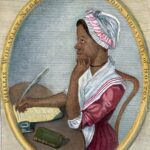
Phillis Wheatley (1753-84), a negro poetess, also an American poet or Afro-American poet, and an English Colonial poet, . She was born in Africa (in Gambia or Senegal) and was aptured by slave traders at the age of eight, she was sold to a family living in Boston, Mass., whose name she bears. While serving as a maid-servant to her proprietor’s wife, she showed an unusual facility with languages. She began writing poetry at the age of thirteen, using as models British poets of the time, especially Alexander Pope and Thomas Gray). In 1773 she accompanied a member of the Wheatley family to England, where she gained widespread attention in literary circles. She subsequently returned to Boston. Her best-known poems are “To the University of Cambridge in New England” (1767), In all honestly Phillis Wheatley should rather be considered English than an Afro-American poet but the exact classification of who she was would depend on the political and cultural views, and biases, of the “classifier.