
YOUR subjects hope, dread Sire–
The crown upon your brows may flourish long,
And that your arm may in your God be strong!
O may your sceptre num’rous nations sway,
And all with love and readiness obey!
But how shall we the British king reward!
Rule thou in peace, our father, and our lord!
Midst the remembrance of thy favours past,
The meanest peasants most admire the last*
May George, beloved by all the nations round,
Live with heav’ns choicest constant blessings crown’d!
Great God, direct, and guard him from on high,
And from his head let ev’ry evil fly!
And may each clime with equal gladness see
A monarch’s smile can set his subjects free!
* The Repeal of the Stamp Act.
End of the poem
15 random poems
- A Song Of Eternity In Time by Sidney Lanier
- A Eulogy by Shaunna Harper
- Николай Гумилев – Канцона вторая
- On A Spaniel, Called Beau, Killing A Young Bird by William Cowper
- A Carta/The Letter by Soaroir de Campos
- Desertion by Rupert Brooke
- Twelve O’Clock by Rabindranath Tagore
- The Beggar’s Valentine by Vachel Lindsay
- Владимир Степанов – Юрий Гагарин
- To the Author of the The Essay on Man by William Somervile
- Fate poem – Andrei Voznesensky poems
- English Poetry. Philip James Bailey. Festus – 45. Филип Джеймс Бэйли.
- THE MOSAIC by Satish Verma
- Олег Бундур – Я не плачу
- Surf Song
Some external links:
Duckduckgo.com – the alternative in the US
Quant.com – a search engine from France, and also an alternative, at least for Europe
Yandex – the Russian search engine (it’s probably the best search engine for image searches).
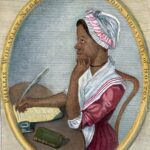
Phillis Wheatley (1753-84), a negro poetess, also an American poet or Afro-American poet, and an English Colonial poet, . She was born in Africa (in Gambia or Senegal) and was aptured by slave traders at the age of eight, she was sold to a family living in Boston, Mass., whose name she bears. While serving as a maid-servant to her proprietor’s wife, she showed an unusual facility with languages. She began writing poetry at the age of thirteen, using as models British poets of the time, especially Alexander Pope and Thomas Gray). In 1773 she accompanied a member of the Wheatley family to England, where she gained widespread attention in literary circles. She subsequently returned to Boston. Her best-known poems are “To the University of Cambridge in New England” (1767), In all honestly Phillis Wheatley should rather be considered English than an Afro-American poet but the exact classification of who she was would depend on the political and cultural views, and biases, of the “classifier.