
A poem by Alexander Pushkin – Pouchkine, Pooshkin (1799-1837), in English translation
The senseless years’ extinguished mirth and laughter
Oppress me like some hazy morning-after.
But sadness of days past, as alcohol –
The more it age, the stronger grip the soul.
My course is dull. The future’s troubled ocean
Forebodes me toil, misfortune and commotion.
But no, my friends, I do not wish to leave;
I’d rather live, to ponder and to grieve –
And I shall have my share of delectation
Amid all care, distress and agitation:
Time and again I’ll savor harmony,
Melt into tears about some fantasy,
And on my sad decline, to ease affliction,
May love yet show her smile of valediction.

A few random poems:
- Олег Бундур – Справились с делами
- Whatif by Shel Silverstein
- Василий Тредиаковский – Будь жестока, будь упорна
- By A Norfolk Broad
- Time To Transplant by Nijole Miliauskaite
- Poems On Time by Rabindranath Tagore
- Snapshots Of A Daughter In Law
- Robert Burns: On John Bushby, Esq., Tinwald Downs:
- With A Copy Of Shakespeares Sonnets On Leaving College
- Agatha
- Robert Burns: Inscription To Miss Jessy Lewars: On a copy of the Scots Musical Museum, in four volumes, presented to her by Burns.
- Blackberrying by Sylvia Plath
- Ghazal 314 by Jalal ad-Din Muhammad Rumi
- I Remembered by Sara Teasdale
- Pagett, M.P. by Rudyard Kipling
External links
Bat’s Poetry Page – more poetry by Fledermaus
Talking Writing Monster’s Page –
Batty Writing – the bat’s idle chatter, thoughts, ideas and observations, all original, all fresh
Poems in English
- Sonnet 20: A woman’s face with Nature’s own hand painted by William Shakespeare
- Sonnet 1: From fairest creatures we desire increase by William Shakespeare
- Sonnet 19: Devouring Time blunt thou the lion’s paws by William Shakespeare
- Sonnet 18: Shall I compare thee to a summer’s day? by William Shakespeare
- Sonnet 17: Who will believe my verse in time to come by William Shakespeare
- Sonnet 16: But wherefore do not you a mightier way by William Shakespeare
- Sonnet 15: When I consider every thing that grows by William Shakespeare
- Sonnet 154: The little Love-god lying once asleep by William Shakespeare
- Sonnet 153: Cupid laid by his brand and fell asleep by William Shakespeare
- Sonnet 152: In loving thee thou know’st I am forsworn by William Shakespeare
- Sonnet 151: Love is too young to know what conscience is by William Shakespeare
- Sonnet 150: O from what power hast thou this powerful might by William Shakespeare
- Sonnet 14: Not from the stars do I my judgement pluck by William Shakespeare
- Sonnet 54: O, how much more doth beauty beauteous seem by William Shakespeare
- Sonnet 53: What is your substance, whereof are you made by William Shakespeare
- Sonnet 52: So am I as the rich whose blessèd key by William Shakespeare
- Sonnet 51: Thus can my love excuse the slow offence by William Shakespeare
- Sonnet 50: How heavy do I journey on the way by William Shakespeare
- Sonnet 4: Unthrifty loveliness, why dost thou spend by William Shakespeare
- Sonnet 49: Against that time, if ever that time come by William Shakespeare
More external links (open in a new tab):
Doska or the Board – write anything
Search engines:
Yandex – the best search engine for searches in Russian (and the best overall image search engine, in any language, anywhere)
Qwant – the best search engine for searches in French, German as well as Romance and Germanic languages.
Ecosia – a search engine that supposedly… plants trees
Duckduckgo – the real alternative and a search engine that actually works. Without much censorship or partisan politics.
Yahoo– yes, it’s still around, amazingly, miraculously, incredibly, but now it seems to be powered by Bing.
Parallel Translations of Poetry
The Poetry Repository – an online library of poems, poetry, verse and poetic works
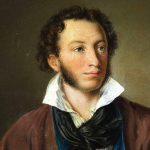
Alexander Pushkin (1799-1937) was a Russian poet, playwright and prose writer, founder of the realistic trend in Russian literature, literary critic and theorist of literature, historian, publicist, journalist; one of the most important cultural figures in Russia in the first third of the 19th century.