
Time fly with greater speed away,
Add feathers to thy wings,
Till thy haste in flying brings
That wished-for and expected Day.
Comfort’s Son we then shall see,
Though at first it darkened be
With dangers yet, those clouds but gone,
Our Day will put his lustre on.
Then though Death’s sad night appear,
And we in lonely silence rest;
Our ravish’d Souls no more shall fear,
But with lasting day be blest.
And then no friends can part us more,
Nor no new death extend its power;
Thus there’s nothing can dissever
Hearts which Love hath joined together.

A few random poems:
- oh no – not another love poem! by Raj Arumugam
- Жан де Лафонтен – Две Козы
- New York’s Bad Dream by Matthew Abuelo
- Владимир Бенедиктов – Довольно
- The Lost Star — English Translation by Rabindranath Tagore
- Teacher
- The Skies by William Cullen Bryant
- Clashes by Ndue Ukaj
- Robert Burns: M’Pherson’s Farewell:
- English Poetry. Philip James Bailey. Festus – 9. Филип Джеймс Бэйли.
- Love and Law by Vachel Lindsay
- Владимир Костров – Бедное сердце болит спозаранку
- For Fixation Who Loves Me Back poem – Amy Cavanaugh poems | Poems and Poetry
- Robert Burns: A Mother’s Lament For the Death of Her Son.:
- You Can Have It by Philip Levine
External links
Bat’s Poetry Page – more poetry by Fledermaus
Talking Writing Monster’s Page –
Batty Writing – the bat’s idle chatter, thoughts, ideas and observations, all original, all fresh
Poems in English
- Sir Philip Sidney; Astrophel and Stella: XXIII by Sir Philip Sidney
- Ring Out Your Bells by Sir Philip Sidney
- Psalm 19: Coeli Enarrant by Sir Philip Sidney
- Philomela by Sir Philip Sidney
- Loving In Truth, And Fain In Verse My Love To Show by Sir Philip Sidney
- Leave Me, O Love Which Reachest But To Dust by Sir Philip Sidney
- Come Sleep, O Sleep! The Certain Knot Of Peace by Sir Philip Sidney
- Astrophel and Stella: XXXIX by Sir Philip Sidney
- Astrophel and Stella: XXXIII by Sir Philip Sidney
- Astrophel and Stella: XX by Sir Philip Sidney
- Astrophel and Stella: XV by Sir Philip Sidney
- Astrophel and Stella: XLI by Sir Philip Sidney
- Astrophel and Stella: XCII by Sir Philip Sidney
- Astrophel and Stella VII: WhenNature Made her Chief Work by Sir Philip Sidney
- Astrophel And Stella-Sonnet XXXI by Sir Philip Sidney
- Astrophel And Stella-Sonnet LIV by Sir Philip Sidney
- Astrophel And Stella; Sonnet CVIII by Sir Philip Sidney
- Astrophel and Stella LXXXIV: HIGHWAY by Sir Philip Sidney
- Astrophel and Stella: LXXI by Sir Philip Sidney
- Astrophel and Stella: LXIV by Sir Philip Sidney
More external links (open in a new tab):
Doska or the Board – write anything
Search engines:
Yandex – the best search engine for searches in Russian (and the best overall image search engine, in any language, anywhere)
Qwant – the best search engine for searches in French, German as well as Romance and Germanic languages.
Ecosia – a search engine that supposedly… plants trees
Duckduckgo – the real alternative and a search engine that actually works. Without much censorship or partisan politics.
Yahoo– yes, it’s still around, amazingly, miraculously, incredibly, but now it seems to be powered by Bing.
Parallel Translations of Poetry
The Poetry Repository – an online library of poems, poetry, verse and poetic works
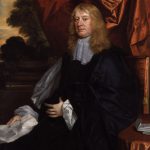
Abraham Cowley (1618 – 1667), the Royalist Poet.Poet and essayist Abraham Cowley was born in London, England, in 1618. He displayed early talent as a poet, publishing his first collection of poetry, Poetical Blossoms (1633), at the age of 15. Cowley studied at Cambridge University but was stripped of his Cambridge fellowship during the English Civil War and expelled for refusing to sign the Solemn League and Covenant of 1644. In turn, he accompanied Queen Henrietta Maria to France, where he spent 12 years in exile, serving as her secretary. During this time, Cowley completed The Mistress (1647). Arguably his most famous work, the collection exemplifies Cowley’s metaphysical style of love poetry. After the Restoration, Cowley returned to England, where he was reinstated as a Cambridge fellow and earned his MD before finally retiring to the English countryside. He is buried at Westminster Abbey alongside Geoffrey Chaucer and Edmund Spenser. Cowley is a wonderful poet and an outstanding representative of the English baroque.