
What shall we say, since silent now is he
Who when he spoke, all things would silent be?
Who had so many languages in store,
That only fame shall speak of him in more;
Whom England now no more return’d must see;
He’s gone to heaven on his fourth embassy.
On earth he travell’d often; not to say
H’ had been abroad, or pass loose time away.
In whatsoever land he chanc’d to come,
He read the men and manners, bringing home
Their wisdom, learning, and their piety,
As if he went to conquer, not to see.
So well he understood the most and best
Of tongues, that Babel sent into the West;
Spoke them so truly, that he had (you’d swear)
Not only liv’d, but been born every-where.
Justly each nation’s speech to him was known,
Who for the world was made, not us alone;
Nor ought the language of that man be less,
Who in his breast had all things to express.
We say that learning’s endless, and blame Fate
For not allowing life a longer date:
He did the utmost bounds of knowledge find,
He found them not so large as was his mind;
But, like the brave Pellæan youth, did moan
Because that art had no more worlds than one;
And, when he saw that he through all had past,
He dy’d, lest he should idle grow at last.

A few random poems:
- I Entreat You, Alfred Tennyson by Walter Savage Landor
- Rita And The Rifle by Mahmoud Darwish
- In Memoriam
- Eclogue VI by Virgil
- The Metropolitan Tower by Sara Teasdale
- Омар Хайям – Будь камнем твердым я
- Ольга Высотская – Веселый поезд
- Николай Заболоцкий – Приглашение на пир
- Зинаида Александрова – Топотушки
- Love in Twilight by Stephen Vincent Benet
- Robert Burns: To Daunton Me:
- Witch Burning by Sylvia Plath
- Яков Полонский – Памяти С. Я. Надсона
- Translated from Geibel poem – Amy Levy poems | Poems and Poetry
- Olney Hymn 61: The Narrow Way by William Cowper
External links
Bat’s Poetry Page – more poetry by Fledermaus
Talking Writing Monster’s Page –
Batty Writing – the bat’s idle chatter, thoughts, ideas and observations, all original, all fresh
Poems in English
- How I Walked Alone in the Jungles of Heaven by Vachel Lindsay
- How a Little Girl Sang by Vachel Lindsay
- How a Little Girl Danced by Vachel Lindsay
- Honor Among Scamps by Vachel Lindsay
- Here’s to the Mice! by Vachel Lindsay
- Heart of God by Vachel Lindsay
- Genesis by Vachel Lindsay
- General William Booth Enters into Heaven by Vachel Lindsay
- Galahad, Knight Who Perished by Vachel Lindsay
- Foreign Missions in Battle Array by Vachel Lindsay
- Factory Windows are Always Broken by Vachel Lindsay
- Euclid by Vachel Lindsay
- Epitaphs For Two Players by Vachel Lindsay
- Epilogue by Vachel Lindsay
- Elizabeth Barrett Browning by Vachel Lindsay
- Eden in Winter by Vachel Lindsay
- Drying Their Wings by Vachel Lindsay
- Darling Daughter of Babylon by Vachel Lindsay
- Concerning Emperors by Vachel Lindsay
- Caught in a Net by Vachel Lindsay
More external links (open in a new tab):
Doska or the Board – write anything
Search engines:
Yandex – the best search engine for searches in Russian (and the best overall image search engine, in any language, anywhere)
Qwant – the best search engine for searches in French, German as well as Romance and Germanic languages.
Ecosia – a search engine that supposedly… plants trees
Duckduckgo – the real alternative and a search engine that actually works. Without much censorship or partisan politics.
Yahoo– yes, it’s still around, amazingly, miraculously, incredibly, but now it seems to be powered by Bing.
Parallel Translations of Poetry
The Poetry Repository – an online library of poems, poetry, verse and poetic works
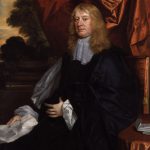
Abraham Cowley (1618 – 1667), the Royalist Poet.Poet and essayist Abraham Cowley was born in London, England, in 1618. He displayed early talent as a poet, publishing his first collection of poetry, Poetical Blossoms (1633), at the age of 15. Cowley studied at Cambridge University but was stripped of his Cambridge fellowship during the English Civil War and expelled for refusing to sign the Solemn League and Covenant of 1644. In turn, he accompanied Queen Henrietta Maria to France, where he spent 12 years in exile, serving as her secretary. During this time, Cowley completed The Mistress (1647). Arguably his most famous work, the collection exemplifies Cowley’s metaphysical style of love poetry. After the Restoration, Cowley returned to England, where he was reinstated as a Cambridge fellow and earned his MD before finally retiring to the English countryside. He is buried at Westminster Abbey alongside Geoffrey Chaucer and Edmund Spenser. Cowley is a wonderful poet and an outstanding representative of the English baroque.