
A poem by Alexander Pushkin – Pouchkine, Pooshkin (1799-1837), in English translation
Storm-clouds hurtle, storm-clouds hover;
Flying snow is set alight
By the moon whose form they cover;
Blurred the heavens, blurred the night.
On and on our coach advances,
Little bell goes din-din-din…
Round are vast, unknown expanses;
Terror, terror is within.
— Faster, coachman! “Can’t, sir, sorry:
Horses, sir, are nearly dead.
I am blinded, all is blurry,
All snowed up; can’t see ahead.
Sir, I tell you on the level:
We have strayed, we’ve lost the trail.
What can WE do, when a devil
Drives us, whirls us round the vale?
“There, look, there he’s playing, jolly!
Huffing, puffing in my course;
There, you see, into the gully
Pushing the hysteric horse;
Now in front of me his figure
Looms up as a queer mile-mark —
Coming closer, growing bigger,
Sparking, melting in the dark.”
Storm-clouds hurtle, storm-clouds hover;
Flying snow is set alight
By the moon whose form they cover;
Blurred the heavens, blurred the night.
We can’t whirl so any longer!
Suddenly, the bell has ceased,
Horses halted… — Hey, what’s wrong there?
“Who can tell! — a stump? a beast?..”
Blizzard’s raging, blizzard’s crying,
Horses panting, seized by fear;
Far away his shape is flying;
Still in haze the eyeballs glare;
Horses pull us back in motion,
Little bell goes din-din-din…
I behold a strange commotion:
Evil spirits gather in —
Sundry, ugly devils, whirling
In the moonlight’s milky haze:
Swaying, flittering and swirling
Like the leaves in autumn days…
What a crowd! Where are they carried?
What’s the plaintive song I hear?
Is a goblin being buried,
Or a sorceress married there?
Storm-clouds hurtle, storm-clouds hover;
Flying snow is set alight
By the moon whose form they cover;
Blurred the heavens, blurred the night.
Swarms of devils come to rally,
Hurtle in the boundless height;
Howling fills the whitening valley,
Plaintive screeching rends my heart…
translated by: Genia Gurarie
email: egurarie@princeton.edu

Copyright ©:
Genia Gurarie
A few random poems:
- Sonnet 23: As an unperfect actor on the stage by William Shakespeare
- At The Close Of The Canvass poem – Ambrose Bierce poems | Poems and Poetry
- Николай Карамзин – Триолет Алете в тот день, как ей исполнилось 14 лет
- Низами Гянджеви – В ночи я знаю
- Holidays by Nicolene Kissinger
- Sonnet 149: Canst thou, O cruel, say I love thee not by William Shakespeare
- On A World Of Imaginary & Freedom Dwell by Nithin Purple
- Moonrise poem – Gerard Manley Hopkins poems
- Wind on the Hill by AA Milne
- In Search Of Cinderella by Shel Silverstein
- Федор Сологуб – Сверкайте, миги строгих дней
- Come down, O Maid poem – Lord Alfred Tennyson poems
- Doomes-Day: The Second Houre by William Alexander
- Run to Death poem – Amy Levy poems | Poems and Poetry
- What a beautiful world by Vladimir Marku
External links
Bat’s Poetry Page – more poetry by Fledermaus
Talking Writing Monster’s Page –
Batty Writing – the bat’s idle chatter, thoughts, ideas and observations, all original, all fresh
Poems in English
- The Deserted Garden
- The Bayadere
- The Aisne
- Tezcotzinco
- Sonnet Xvi Who Shall Invoke Her
- Sonnet Xv
- Sonnet Xiv
- Sonnet Xiii
- Sonnet Xii
- Sonnet Xi
- Sonnet X
- Sonnet Viii
- Sonnet Vii
- Sonnet Vi
- Sonnet V
- Sonnet Ix
- Sonnet Iv
- Sonnet Iii
- Sonnet Ii
- Sonnet I
More external links (open in a new tab):
Doska or the Board – write anything
Search engines:
Yandex – the best search engine for searches in Russian (and the best overall image search engine, in any language, anywhere)
Qwant – the best search engine for searches in French, German as well as Romance and Germanic languages.
Ecosia – a search engine that supposedly… plants trees
Duckduckgo – the real alternative and a search engine that actually works. Without much censorship or partisan politics.
Yahoo– yes, it’s still around, amazingly, miraculously, incredibly, but now it seems to be powered by Bing.
Parallel Translations of Poetry
The Poetry Repository – an online library of poems, poetry, verse and poetic works
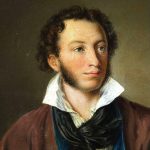
Alexander Pushkin (1799-1937) was a Russian poet, playwright and prose writer, founder of the realistic trend in Russian literature, literary critic and theorist of literature, historian, publicist, journalist; one of the most important cultural figures in Russia in the first third of the 19th century.