
A poem by Alexander Pushkin – Pouchkine, Pooshkin (1799-1837), in English translation
Don’t ask me why, alone in dismal thought,
In times of mirth, I’m often filled with strife,
And why my weary stare is so distraught,
And why I don’t enjoy the dream of life;
Don’t ask me why my happiness has perished,
Why I don’t love the love that pleased me then,
No longer can I call someone my cherished–
Who once felt love will never love again;
Who once felt bliss, no more will feel its essence,
A moment’s happiness is all that we receive:
From youth, prosperity and joyful pleasantry,
All that is left is apathy and grief…

A few random poems:
- Byzantium by William Butler Yeats
- Владимир Высоцкий – Войны и голодухи натерпелися мы всласть
- Низами Гянджеви – Увы, на этой лужайке, где согнут страстью я,
- Олег Григорьев – Угро
- To a President. by Walt Whitman
- Mowgli’s Song by Rudyard Kipling
- Egotist poem – Ambrose Bierce poems | Poems and Poetry
- The Old Age Of Queen Maeve by William Butler Yeats
- A Dialogue, Between the Resolved Soul, And Created Pleasure poem – Andrew Marvell poems
- In Sutton Woods poem – Alfred Austin
- For The Record
- Words Unspoken by Mark Olynyk
- Владимир Маяковский – Типографы книги делают… (РОСТА №241)
- Шекспир – Ты положи с моей любовью рядом – Сонет 117
- Владимир Маяковский – Тучкины штучки
External links
Bat’s Poetry Page – more poetry by Fledermaus
Talking Writing Monster’s Page –
Batty Writing – the bat’s idle chatter, thoughts, ideas and observations, all original, all fresh
Poems in English
- Sonnet 71: No longer mourn for me when I am dead by William Shakespeare
- Sonnet 70: That thou art blamed shall not be thy defect by William Shakespeare
- Sonnet 6: Then let not winter’s ragged hand deface by William Shakespeare
- Sonnet 69: Those parts of thee that the world’s eye doth view by William Shakespeare
- Sonnet 68: Thus is his cheek the map of days outworn by William Shakespeare
- Sonnet 67: Ah, wherefore with infection should he live by William Shakespeare
- Sonnet 66: Tired with all these, for restful death I cry by William Shakespeare
- Sonnet 65: Since brass, nor stone, nor earth, nor boundless sea by William Shakespeare
- Sonnet 64: When I have seen by Time’s fell hand defaced by William Shakespeare
- Sonnet 63: Against my love shall be, as I am now by William Shakespeare
- Sonnet 62: Sin of self-love possesseth all mine eye by William Shakespeare
- Sonnet 61: Is it thy will thy image should keep open by William Shakespeare
- Sonnet 60: Like as the waves make towards the pebbled shore by William Shakespeare
- Sonnet 5: Those hours, that with gentle work did frame by William Shakespeare
- Sonnet 59: If there be nothing new, but that which is by William Shakespeare
- Sonnet 58: That god forbid, that made me first your slave by William Shakespeare
- Sonnet 57: Being your slave, what should I do but tend by William Shakespeare
- Sonnet 56: Sweet love, renew thy force, be it not said by William Shakespeare
- Sonnet 55: Not marble, nor the gilded monuments by William Shakespeare
- Sonnet 95: How sweet and lovely dost thou make the shame by William Shakespeare
More external links (open in a new tab):
Doska or the Board – write anything
Search engines:
Yandex – the best search engine for searches in Russian (and the best overall image search engine, in any language, anywhere)
Qwant – the best search engine for searches in French, German as well as Romance and Germanic languages.
Ecosia – a search engine that supposedly… plants trees
Duckduckgo – the real alternative and a search engine that actually works. Without much censorship or partisan politics.
Yahoo– yes, it’s still around, amazingly, miraculously, incredibly, but now it seems to be powered by Bing.
Parallel Translations of Poetry
The Poetry Repository – an online library of poems, poetry, verse and poetic works
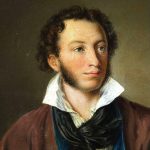
Alexander Pushkin (1799-1937) was a Russian poet, playwright and prose writer, founder of the realistic trend in Russian literature, literary critic and theorist of literature, historian, publicist, journalist; one of the most important cultural figures in Russia in the first third of the 19th century.