
A poem by Alexander Pushkin – Pouchkine, Pooshkin (1799-1837), in English translation
Don’t ask me why, alone in dismal thought,
In times of mirth, I’m often filled with strife,
And why my weary stare is so distraught,
And why I don’t enjoy the dream of life;
Don’t ask me why my happiness has perished,
Why I don’t love the love that pleased me then,
No longer can I call someone my cherished–
Who once felt love will never love again;
Who once felt bliss, no more will feel its essence,
A moment’s happiness is all that we receive:
From youth, prosperity and joyful pleasantry,
All that is left is apathy and grief…

A few random poems:
- Степан Щипачев – Ровеснику
- The Waters by W H Auden
- Look Now On That Adventurer Who Hath Paid by William Wordsworth
- Binsey Poplars poem – Gerard Manley Hopkins poems
- A Tale. June 1793 by William Cowper
- On Mr. Gay poem – Alexander Pope
- Every day I bear a burden by Jalal ad-Din Muhammad Rumi
- America To Great Britain by Washington Allston
- To A Young Lady. On Her Recovery From A Fever by Samuel Taylor Coleridge
- Огюст Барбье – Эпилог
- My Highland Lassie, O by Robert Burns
- The Street Sounds to the Soldiers’ Tread poem – A. E. Housman
- Владимир Высоцкий – Не могу ни выпить, ни забыться
- Broccoli by Rina Ferrarelli
- From The Long Sad Party by Mark Strand
External links
Bat’s Poetry Page – more poetry by Fledermaus
Talking Writing Monster’s Page –
Batty Writing – the bat’s idle chatter, thoughts, ideas and observations, all original, all fresh
Poems in English
- Sonnet 94: They that have power to hurt and will do none by William Shakespeare
- Sonnet 93: So shall I live, supposing thou art true by William Shakespeare
- Sonnet 92: But do thy worst to steal thy self away by William Shakespeare
- Sonnet 91: Some glory in their birth, some in their skill by William Shakespeare
- Sonnet 90: Then hate me when thou wilt; if ever, now by William Shakespeare
- Sonnet 8: Music to hear, why hear’st thou music sadly? by William Shakespeare
- Sonnet 89: Say that thou didst forsake me for some fault by William Shakespeare
- Sonnet 88: When thou shalt be disposed to set me light by William Shakespeare
- Sonnet 87: Farewell! Thou art too dear for my possessing by William Shakespeare
- Sonnet 86: Was it the proud full sail of his great verse by William Shakespeare
- Sonnet 85: My tongue-tied Muse in manners holds her still by William Shakespeare
- Sonnet 84: Who is it that says most, which can say more by William Shakespeare
- Sonnet 83: I never saw that you did painting need by William Shakespeare
- Sonnet 82: I grant thou wert not married to my Muse by William Shakespeare
- Sonnet 81: Or I shall live your epitaph to make by William Shakespeare
- Sonnet 80: O, how I faint when I of you do write by William Shakespeare
- Sonnet 7: Lo, in the orient when the gracious light by William Shakespeare
- Sonnet 79: Whilst I alone did call upon thy aid by William Shakespeare
- Sonnet 78: So oft have I invoked thee for my Muse by William Shakespeare
- Sonnet 77: Thy glass will show thee how thy beauties wear by William Shakespeare
More external links (open in a new tab):
Doska or the Board – write anything
Search engines:
Yandex – the best search engine for searches in Russian (and the best overall image search engine, in any language, anywhere)
Qwant – the best search engine for searches in French, German as well as Romance and Germanic languages.
Ecosia – a search engine that supposedly… plants trees
Duckduckgo – the real alternative and a search engine that actually works. Without much censorship or partisan politics.
Yahoo– yes, it’s still around, amazingly, miraculously, incredibly, but now it seems to be powered by Bing.
Parallel Translations of Poetry
The Poetry Repository – an online library of poems, poetry, verse and poetic works
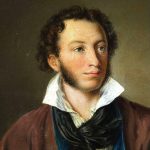
Alexander Pushkin (1799-1937) was a Russian poet, playwright and prose writer, founder of the realistic trend in Russian literature, literary critic and theorist of literature, historian, publicist, journalist; one of the most important cultural figures in Russia in the first third of the 19th century.