
A poem by Alexander Pushkin – Pouchkine, Pooshkin (1799-1837), in English translation
I saw the Death, and she was seating
By quiet entrance at my own home,
I saw the doors were opened in my tomb,
And there, and there my hope was a-flitting
I’ll die, and traces of my past
In days of future will be never sighted,
Look of my eyes will never be delighted
By dear look, in my existence last.
Farewell the somber world, where, precipice above,
My gloomy road was a-streaming,
Where life for me was never cheering,
Where I was loving, having not to love!
The dazzling heavens’ azure curtain,
Beloved hills, the brook’s enchanting dance,
You, mourn — the inspiration’s chance,
You, peaceful shades of wilderness, uncertain,
And all — farewell, farewell at once.

A few random poems:
- Testing The Bomb by Shel Silverstein
- Rogue Elephant poem – A. R. Ammons poems | Poetry Monster
- Epigram on Francis Grose the Antiquary by Robert Burns
- Федор Тютчев – Каким венком нам увенчать
- English Poetry. Richard Hovey. The Old Pine. Ричард Хави.
- Unrequited Love – Why Can’t You Love Me Back?
- Федор Сологуб – Золушка
- Sadness and Joy by William Henry Davies
- Pathos Is The Skyward Tanka
- Николай Языков – Девятое мая
- Schoolroom On A Wet Afternoon by Vernon Scannell
- Михаил Лермонтов – Звуки и взор
- Eclogue IV by Virgil
- Civil War East Coast United States North America 1860 64
- Омар Хайям – Благородство страданием, друг, рождено
External links
Bat’s Poetry Page – more poetry by Fledermaus
Talking Writing Monster’s Page –
Batty Writing – the bat’s idle chatter, thoughts, ideas and observations, all original, all fresh
Poems in English
- England! The Time Is Come When Thou Should’st Wean by William Wordsworth
- Emperors And Kings, How Oft Have Temples Rung by William Wordsworth
- Ellen Irwin Or The Braes Of Kirtle by William Wordsworth
- Elegiac Stanzas Suggested By A Picture Of Peele Castle by William Wordsworth
- Dion [See Plutarch] by William Wordsworth
- Crusaders by William Wordsworth
- Composed While The Author Was Engaged In Writing A Tract Occasioned By The Convention Of Cintra by William Wordsworth
- Composed Upon Westminster Bridge, September 3, 1802 by William Wordsworth
- Composed on The Eve Of The Marriage Of A Friend In The Vale Of Grasmere by William Wordsworth
- Composed Near Calais, On The Road Leading To Ardres, August 7, 1802 by William Wordsworth
- Composed In The Valley Near Dover, On The Day Of Landing by William Wordsworth
- Composed During A Storm by William Wordsworth
- Composed By The Side Of Grasmere Lake 1806 by William Wordsworth
- Composed By The Sea-Side, Near Calais, August 1802 by William Wordsworth
- Composed At The Same Time And On The Same Occasion by William Wordsworth
- Composed After A Journey Across The Hambleton Hills, Yorkshire by William Wordsworth
- Characteristics Of A Child Three Years Old by William Wordsworth
- Character Of The Happy Warrior by William Wordsworth
- Calm is all Nature as a Resting Wheel. by William Wordsworth
- “Call Not The Royal Swede Unfortunate” by William Wordsworth
More external links (open in a new tab):
Doska or the Board – write anything
Search engines:
Yandex – the best search engine for searches in Russian (and the best overall image search engine, in any language, anywhere)
Qwant – the best search engine for searches in French, German as well as Romance and Germanic languages.
Ecosia – a search engine that supposedly… plants trees
Duckduckgo – the real alternative and a search engine that actually works. Without much censorship or partisan politics.
Yahoo– yes, it’s still around, amazingly, miraculously, incredibly, but now it seems to be powered by Bing.
Parallel Translations of Poetry
The Poetry Repository – an online library of poems, poetry, verse and poetic works
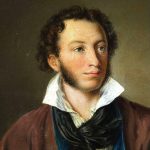
Alexander Pushkin (1799-1937) was a Russian poet, playwright and prose writer, founder of the realistic trend in Russian literature, literary critic and theorist of literature, historian, publicist, journalist; one of the most important cultural figures in Russia in the first third of the 19th century.