
Life’s a name
That nothing here can truly claim;
This wretched inn, where we scarce stay to bait,
We call our dwelling-place!
And mighty voyages we take,
And mighty journeys seem to make,
O’er sea and land, the little point that has no space.
Because we fight and battles gain,
Some captives call, and say, “the rest are slain”;
Because we heap up yellow earth, and so
Rich, valiant, wise, and virtuous seem to grow;
Because we draw a long nobility
From hieroglyphic proofs of heraldry-
We grow at last by Custom to believe,
That really we Live;
Whilst all these Shadows, that for Things we take,
Are but the empty Dreams which in Death’s sleep we make.

A few random poems:
- Malay Song
- Zoo-Keeper’s Wife by Sylvia Plath
- Prisoner by Rabindranath Tagore
- Sheep In Fog by Sylvia Plath
- Desire # 4 by Patricia Fargnoli
- Mushrooms by Sylvia Plath
- Константин Бальмонт – Далеким близким
- AWAY FROM HOME by Satish Verma
- Владимир Британишский – Феодосия, Керчь, Таганрог
- Orlando Furioso Canto 15 by Ludovico Ariosto
- The Best Blues Songs Ever
- The Fault of It poem – Ezra Pound poems
- English Poetry. Richard Hovey. The Old Pine. Ричард Хави.
- Robert Burns: :
- In An Underground Dressing Station by Siegfried Sassoon
External links
Bat’s Poetry Page – more poetry by Fledermaus
Talking Writing Monster’s Page –
Batty Writing – the bat’s idle chatter, thoughts, ideas and observations, all original, all fresh
Poems in English
- Epistle to Mrs. Scott of Wauchope House by Robert Burns
- Epistle to Major Logan by Robert Burns
- Epistle to John Rankine by Robert Burns
- Epistle to John Maxwell, Esq., of Terraughty by Robert Burns
- Epistle to John Goldie, in Kilmarnock by Robert Burns
- Epistle to James Tennant of Glenconner by Robert Burns
- Epistle to James Smith by Robert Burns
- Epistle to Hugh Parker by Robert Burns
- Epistle to Dr. Blacklock by Robert Burns
- Epistle to Davie, A Brother Poet by Robert Burns
- Epistle to Colonel de Peyster by Robert Burns
- Epistle to a Young Friend by Robert Burns
- Epistle on J. Lapraik by Robert Burns
- Epistle from Esopus to Maria by Robert Burns
- Epigrams against the Earl of Galloway by Robert Burns
- Epigram to Miss Jean Scott by Robert Burns
- Epigram to Miss Ainslie in Church by Robert Burns
- Epigram—The True Loyal Natives by Robert Burns
- Epigram—The Toad-eater by Robert Burns
- Epigram—The Raptures of Folly by Robert Burns
More external links (open in a new tab):
Doska or the Board – write anything
Search engines:
Yandex – the best search engine for searches in Russian (and the best overall image search engine, in any language, anywhere)
Qwant – the best search engine for searches in French, German as well as Romance and Germanic languages.
Ecosia – a search engine that supposedly… plants trees
Duckduckgo – the real alternative and a search engine that actually works. Without much censorship or partisan politics.
Yahoo– yes, it’s still around, amazingly, miraculously, incredibly, but now it seems to be powered by Bing.
Parallel Translations of Poetry
The Poetry Repository – an online library of poems, poetry, verse and poetic works
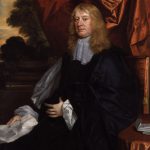
Abraham Cowley (1618 – 1667), the Royalist Poet.Poet and essayist Abraham Cowley was born in London, England, in 1618. He displayed early talent as a poet, publishing his first collection of poetry, Poetical Blossoms (1633), at the age of 15. Cowley studied at Cambridge University but was stripped of his Cambridge fellowship during the English Civil War and expelled for refusing to sign the Solemn League and Covenant of 1644. In turn, he accompanied Queen Henrietta Maria to France, where he spent 12 years in exile, serving as her secretary. During this time, Cowley completed The Mistress (1647). Arguably his most famous work, the collection exemplifies Cowley’s metaphysical style of love poetry. After the Restoration, Cowley returned to England, where he was reinstated as a Cambridge fellow and earned his MD before finally retiring to the English countryside. He is buried at Westminster Abbey alongside Geoffrey Chaucer and Edmund Spenser. Cowley is a wonderful poet and an outstanding representative of the English baroque.